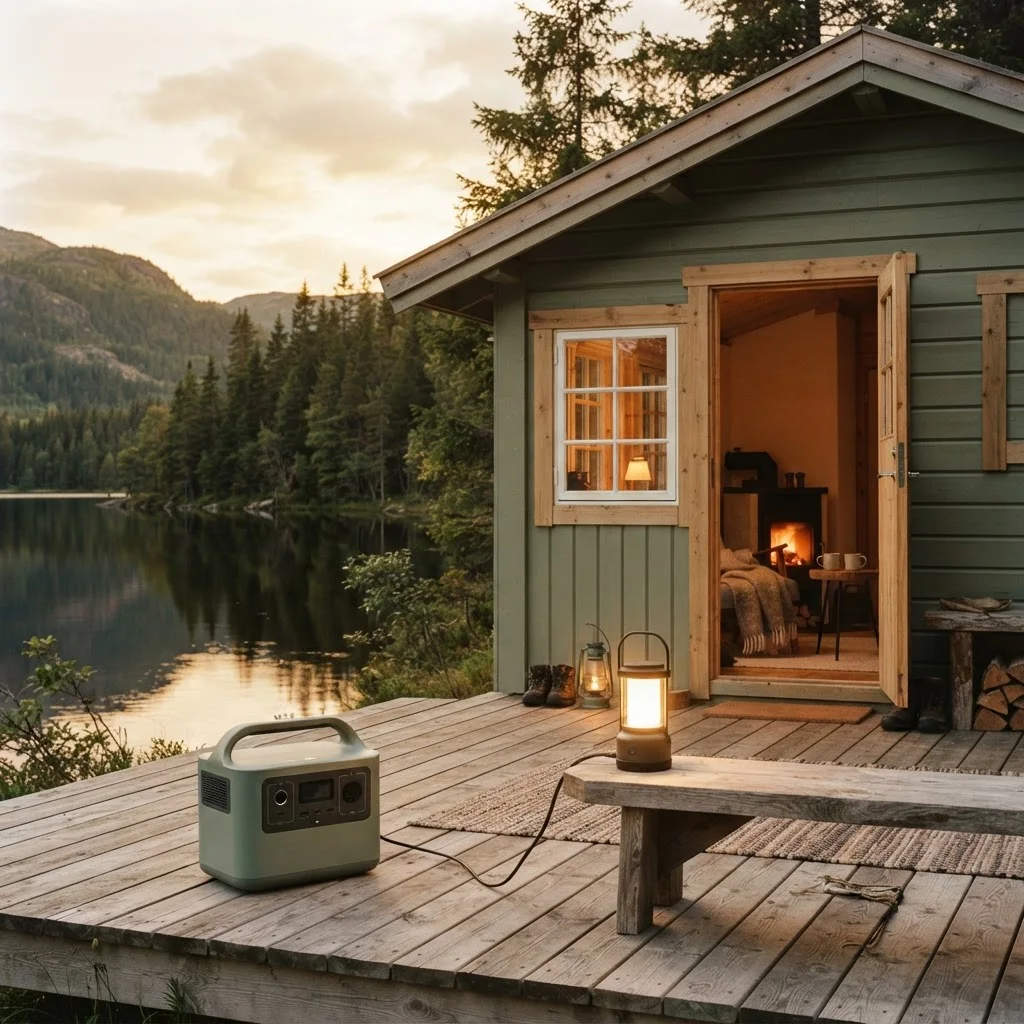
Illustrative lakeside cabin at dusk, with a portable battery powering a lantern on the wooden porch

Buying guide · Updated September 2026

Portable power, explained for real days.

Where a battery station actually helps, how many hours to expect from it, what to check before you buy, and the small habits that stretch every charge. Numbers are illustrative; your devices and the weather decide the rest.

How long it lasts

Estimate your hours before you buy

Pick what you're running and a capacity class to see a range, not a single misleading number.

Roughly the entry, mid and home-backup classes in our catalog.

The everyday essentials

  • Fridge, averaged over its cycles100 W
  • Wi-Fi router10 W
  • Four 10 W LED lights40 W
  • Average combined draw150 W

Estimated running time

10.712hours

2,000 Wh at 150 W, assuming 80–90% of the nameplate energy reaches your devices.

Explore home-backup stations

Where it helps

Three days a station quietly improves

Most people buy for one of these. Start from the day you are planning, and the right size follows.

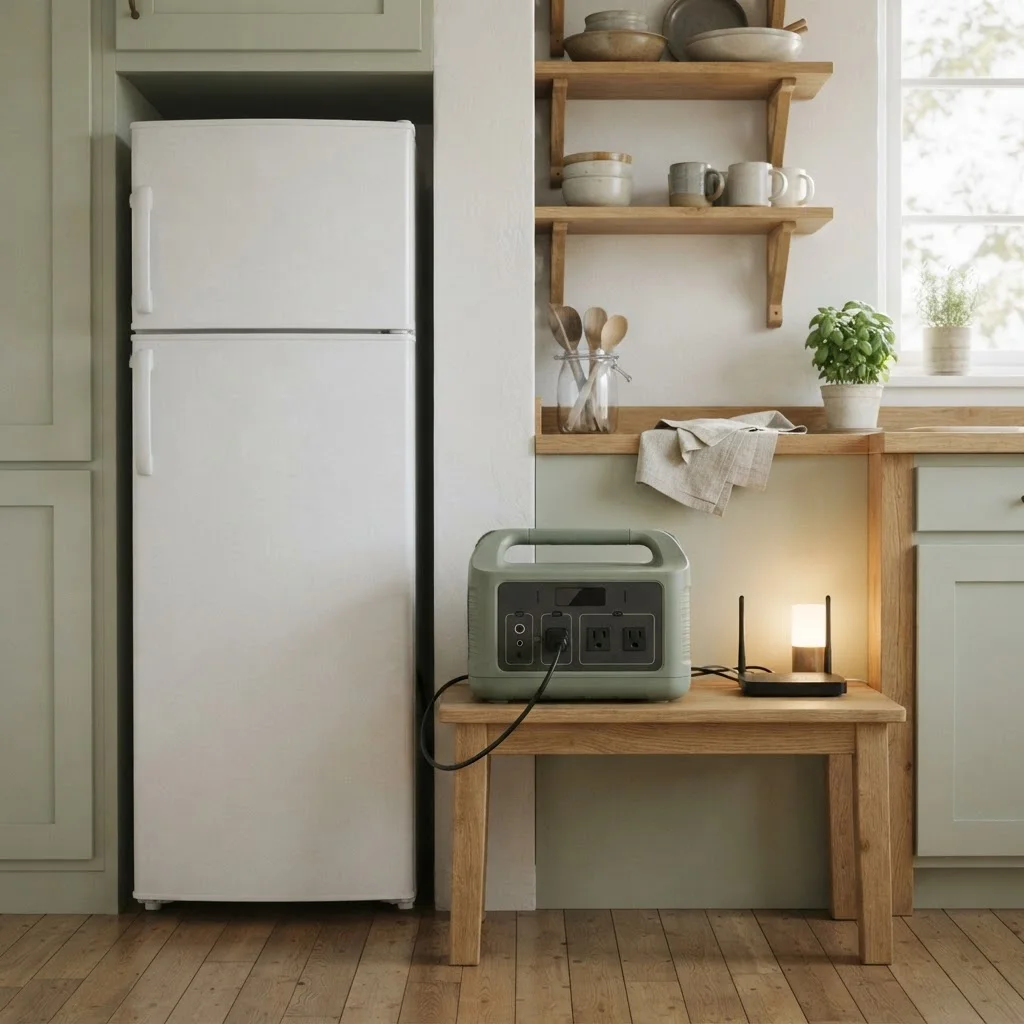
Illustrative home backup setup with a portable station beside a refrigerator, router and small lamp

At home

Keep the essentials on.

A cold fridge, a few lights and a connection to the outside world. Start with the things you would miss first, not every socket in the house.

Check compressor startup power and the hours of backup you need.

Explore home backup
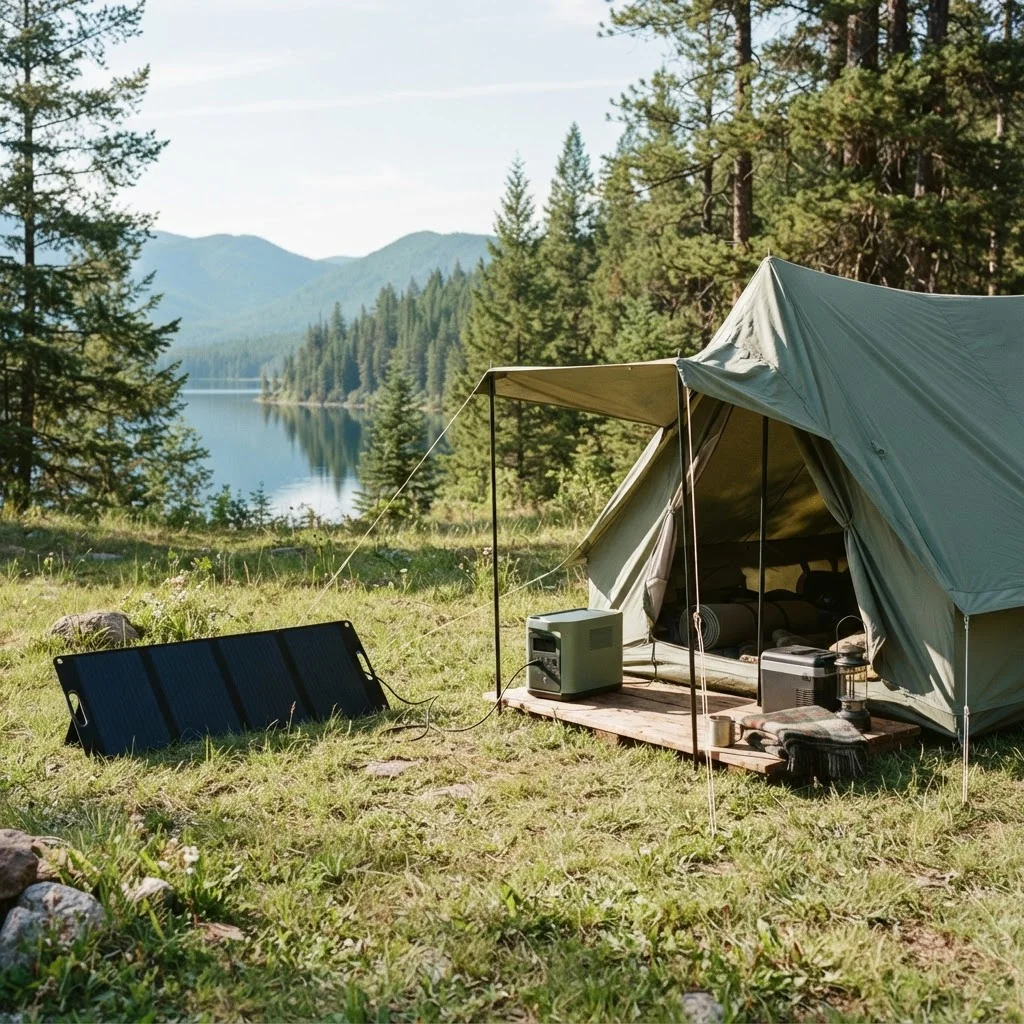
Illustrative campsite with folding panels in the sun and a portable station beside a tent and cooler

Under the stars

A little more comfort.

Cold drinks, a glowing tent and charged cameras. A station keeps camp comfortable; compatible solar panels can refill it during the day.

Budget for a cloudy day, and check the cooler’s average energy use.

Find a camping companion
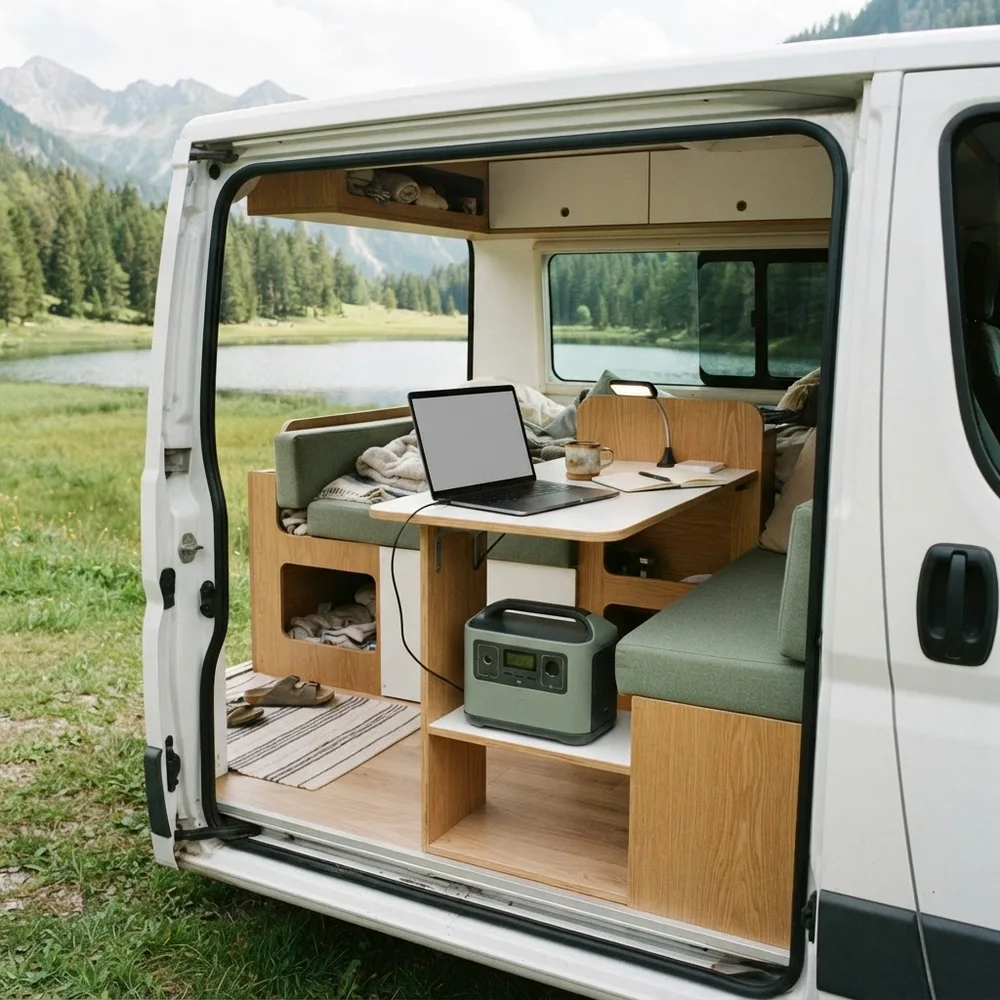
Illustrative campervan workspace with a laptop connected to a portable station below the desk

On the road

Take your day with you.

A laptop in the van, camera batteries between shoots, or a quiet place to work. Compact power can be more useful than the biggest battery.

Match USB-C output to your laptop and check the weight before you pack.

Browse compact stations

What to check

Six things on the spec sheet that actually matter

Read the numbers in this order and most of the confusing choices disappear.

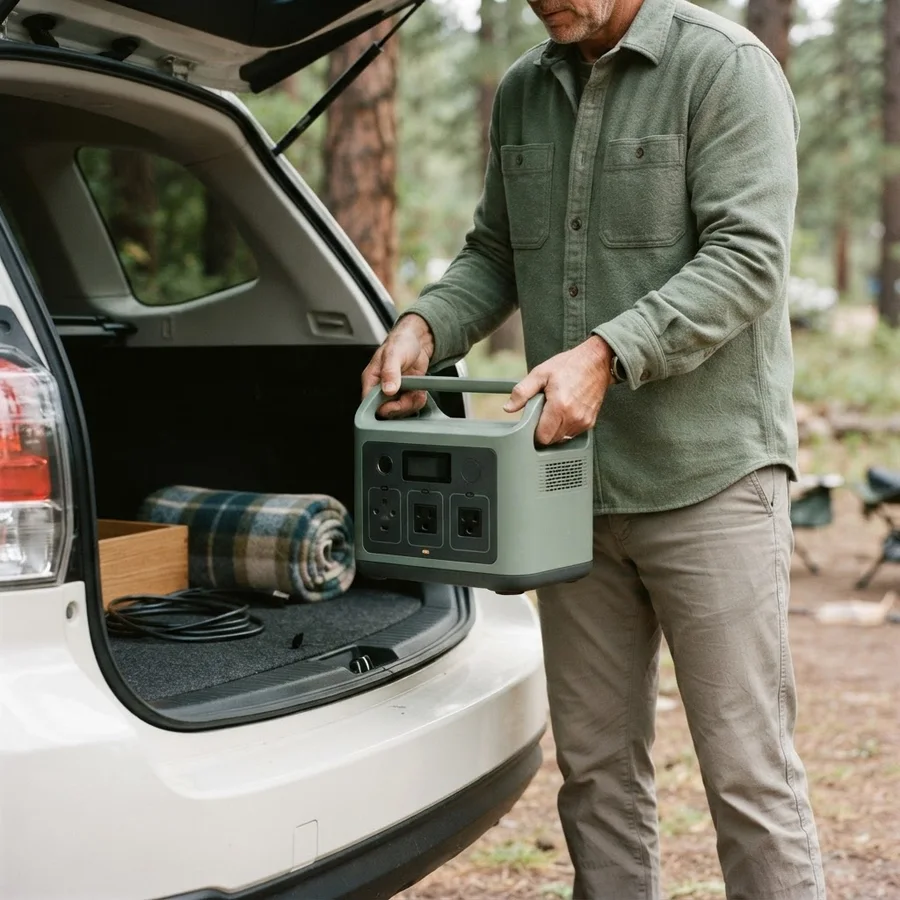
Illustrative traveler lifting a portable station with both hands beside an open car trunk
Weight with an expansion battery attached is the number people forget to check.
Compare these specs side by side

Watt-hours (Wh) describe stored energy. A 1,000 Wh battery holds 1 kWh before conversion losses and reserve. Add the energy your devices need over the hours you plan to use them, then leave a margin. A daily kWh reading from a plug-in energy meter is especially useful for a fridge or cooler that cycles on and off.

Source: U.S. Department of Energy

Small habits

Four habits that leave more charge for the evening

None of these cost anything. Together they are often worth more than the next size up.

  1. 01

    Chill before you leave.

    Cool the fridge and its contents on mains power first. Your battery then maintains the temperature instead of doing all the initial cooling.

  2. 02

    Use the shortest energy path.

    Use compatible USB-C or DC outputs when you can. Switch off unused AC output so an idle inverter is not quietly using your stored energy.

  3. 03

    Sun for the panel. Shade for the battery.

    Give panels a clear view of the sun. Keep the station dry, ventilated and within its operating temperature range, with every vent unobstructed.

  4. 04

    Do a rehearsal, not a guess.

    Try your actual devices together before an outage or a trip. Label the cables, check startup behavior and keep a backup plan for essential equipment.

The shortest energy path usually starts with the right cable. See charging cables and adapters

Questions

The things people ask before checkout

Short answers, with the official source where one exists.

Ready to look at stations?

Jump to the shelf that matches your budget and use.

 
Clean energyPreparing your experience…