
Notes from outside
A weekend off-grid, without the guesswork.
A simple camp energy budget, a sensible solar plan, and small habits that leave more charge for the things you enjoy.
4 min read
Takeaway. Start with a daily energy budget. Treat sunshine as a variable, bring compatible cables, and save a little charge for the unexpected.
Pack for your trip, not a showroom
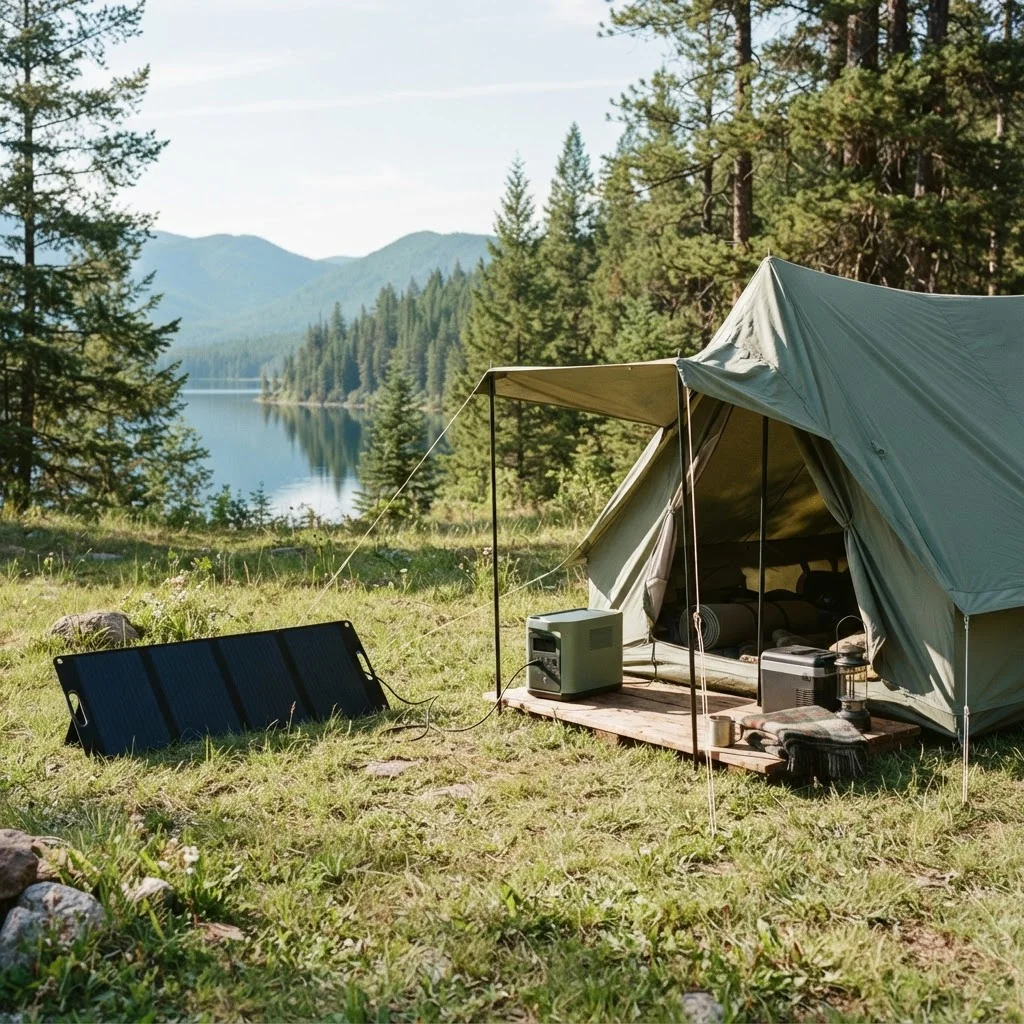
The right camping setup starts with what you actually bring. A tent, phone and lantern ask much less of a battery than a compressor cooler, laptop and several camera chargers. Pick a setup you can lift, fit into the car and place safely at camp. A bigger battery is only more practical if you are happy to carry it.
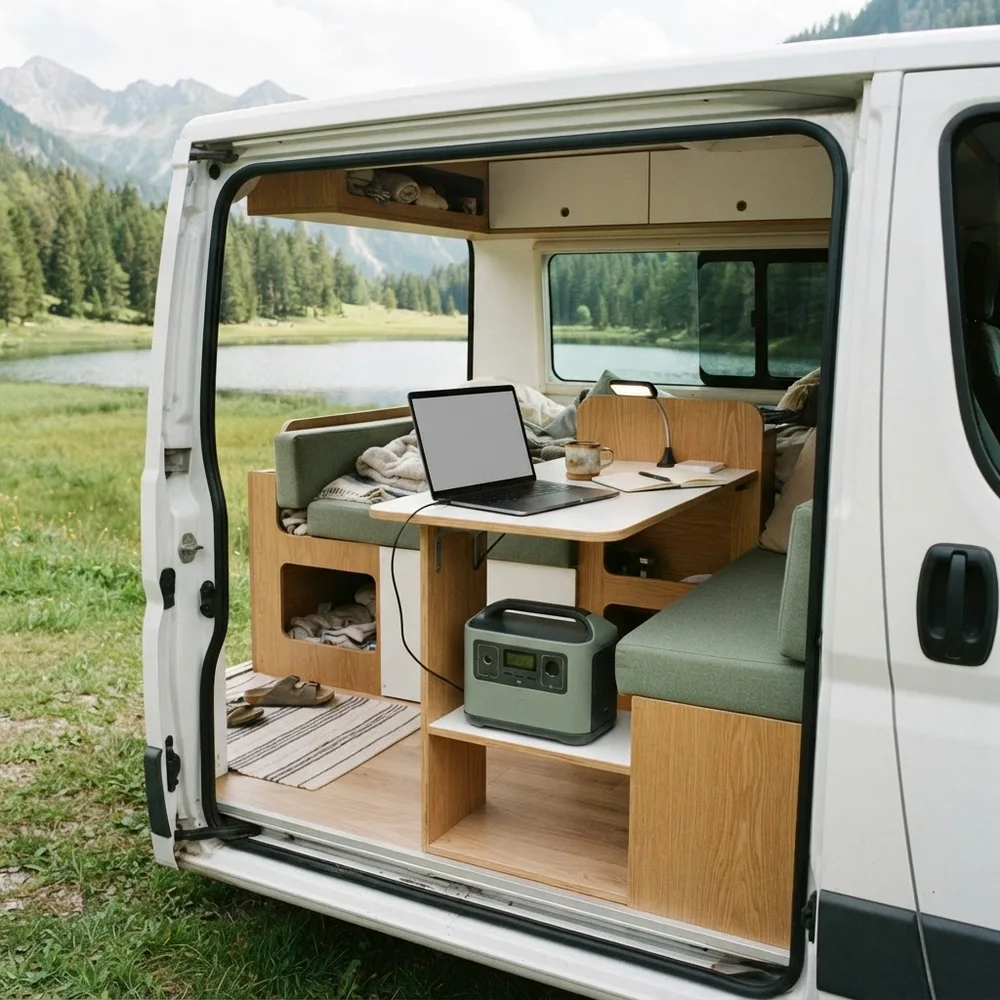
Make a short list of devices and how long each runs. Use energy measured over a day for cycling equipment, and check USB-C power requirements for your laptop. A low-power port may keep the battery from draining as quickly without being able to recharge it while you work.
Give the weekend an energy budget
Consider this invented planning example, not measured device performance. A cooler averaging 25 W over 24 hours uses 600 Wh. A 10 W light used for four hours needs 40 Wh. A 45 W laptop used for two hours needs 90 Wh. Add 30 Wh for phones and the day’s total is 760 Wh.
A 1,000 Wh station at an assumed 85% usable capacity offers 850 Wh before any extra allowance for conditions not captured by that assumption. That is close to this one-day budget, not a relaxed two-day plan. Two days of the same use need 1,520 Wh at the devices. A 2,000 Wh station at 85% provides 1,700 Wh, leaving only a modest margin.
Use your own cooler’s measured consumption, because ambient temperature, thermostat setting, ventilation and how often it is opened all affect the result. If you need more reserve, reduce the load, choose more capacity or arrange reliable recharging. Do not assume a clear-weather weekend before checking the forecast.
A panel rating is not an all-day promise
A 200 W panel does not put 200 W into the battery for every hour between sunrise and sunset. Available sunlight, shade, panel angle, temperature and charging limits affect what you collect. Peak-sun-hours are equivalent hours of strong sunlight, not a count of daylight hours.
For an illustrative solar budget, assume a 200 W array, four peak-sun-hours and a 75% all-in collection-and-storage factor. That would contribute about 600 Wh. The four-hour and 75% figures are planning assumptions, not a site forecast or a performance guarantee. In poor weather, actual collection can be much lower.
Place the panel where it sees the sun and keep the station shaded, dry and ventilated. Check the actual charging input on the display rather than guessing from how bright the day looks. For a remote trip, size your reserve so one disappointing solar day does not spoil the essentials.
Sort the cables before you leave
Check more than the connector shape. The array’s open-circuit voltage, including its cold-weather limit, must stay within the station’s permitted input range. Current and power limits matter too. Use a manufacturer-approved configuration rather than combining panels or adapters by trial and error.
Car charging is not automatically a quick refill. A vehicle accessory socket may be much slower than wall charging, while a dedicated alternator charger needs compatible equipment and proper installation. Follow the vehicle and charger instructions, and do not leave an accessory-socket charging setup draining your starter battery while parked.
Let a few good habits do the work
Pre-chill the cooler and its contents at home. Keep its lid closed between uses and its ventilation openings clear. Use the light level and laptop settings you actually need. Where the device supports it, a direct USB-C or DC connection can avoid an unnecessary AC conversion step; turn unused AC output off.
Before packing, test the full setup with the actual cables. Check that low-load auto-off settings will not unexpectedly switch off a small light or another intermittent load. Keep cables out of walkways, protect connections from moisture and secure the station for travel. A protective storage cover is not permission to block its vents while it is operating.
The payoff is not a more complicated campsite. It is a simpler one: cold food, useful light, a charged camera and fewer reasons to think about the battery once you arrive.
Ready to look at stations?
Browse all stations